Executive Summary
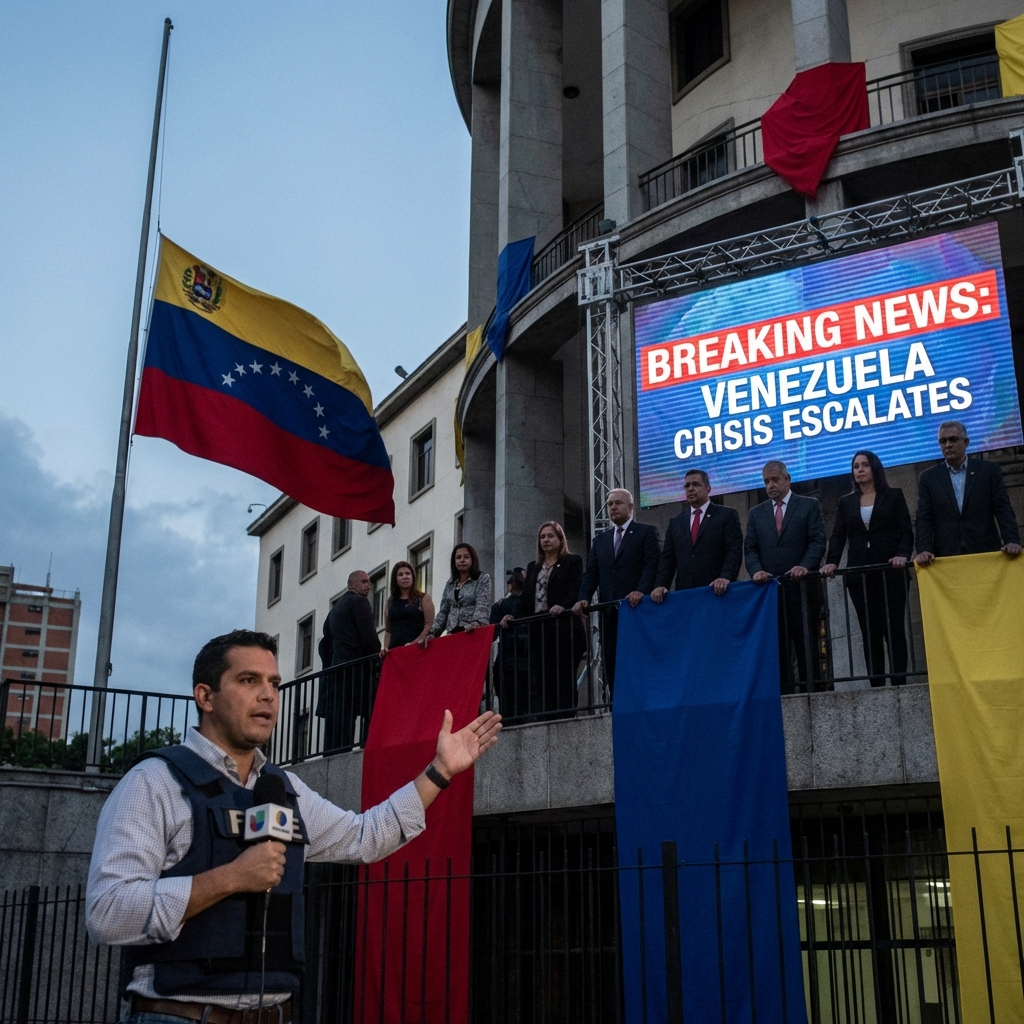
On January 3, 2026, the United States executed Operation Absolute Resolve, a meticulously planned military operation that resulted in the capture of Venezuelan President Nicolás Maduro. This historic event marks a pivotal moment in international relations and the ongoing Venezuelan crisis that has plagued the nation for years.
The operation, involving coordination between U.S. forces and opposition groups, represents one of the most significant geopolitical interventions in Latin America in recent decades. This comprehensive report examines the military operation, its immediate aftermath, and the profound implications for Venezuela's future and international relations.
Background: Venezuela's Descent into Crisis
Venezuela's crisis has roots extending back two decades, characterized by:
- Economic Collapse: Hyperinflation, currency devaluation, and massive GDP contraction
- Political Instability: Contested elections, authoritarian governance, and suppression of opposition
- Humanitarian Emergency: Food and medicine shortages, mass migration, and deteriorating infrastructure
- International Sanctions: Progressive isolation from the global community and economic restrictions
Under Maduro's leadership, Venezuela transformed from one of Latin America's wealthiest nations into a country facing one of the worst humanitarian crises in the Western Hemisphere.
Operation Absolute Resolve: The Execution
Phase 1: Air Dominance
The operation commenced at approximately 02:30 local time with a coordinated air campaign. U.S. forces established complete air superiority within hours, neutralizing Venezuela's air defense capabilities and securing control over Venezuelan airspace.
Key elements included:
- Deployment of advanced stealth aircraft from 20 different military bases
- Electronic warfare operations to disable communication networks
- Precision strikes on critical military infrastructure
- Coordination with CIA intelligence assets on the ground
Phase 2: Ground Operations
Following air dominance, specialized ground units moved swiftly to secure strategic objectives. The operation focused on minimizing civilian casualties while achieving rapid tactical success.
The capture of Maduro occurred approximately 6 hours after the operation's commencement, demonstrating the efficiency and precision of the planning and execution.
International Coordination
The operation benefited from significant intelligence support from CIA assets and coordination with Venezuelan opposition groups. This collaboration proved crucial in identifying Maduro's location and planning the extraction.
Immediate Aftermath
Political Transition
Following Maduro's capture, a power vacuum emerged in Caracas. The international community, led by the Organization of American States (OAS), quickly moved to support a transitional government structure.
Key developments include:
- Emergency meetings of the OAS to coordinate regional response
- International recognition of interim leadership
- Deployment of peacekeeping forces to maintain stability
- Establishment of humanitarian corridors for aid delivery
International Response
The global reaction has been mixed, with responses varying significantly by region and geopolitical alignment:
- Western Support: The United States, European Union, and allied nations expressed support for the operation as a necessary intervention to end authoritarian rule
- Regional Division: Latin American countries showed divided responses, with some supporting democratic transition while others condemned the intervention
- Opposition: Russia, China, and allied nations criticized the operation as a violation of Venezuelan sovereignty
Humanitarian Implications
The crisis has created one of the largest humanitarian emergencies in the Western Hemisphere:
The international community now faces the immense challenge of coordinating humanitarian assistance while supporting political transition. Priority areas include:
- Emergency food and medical supplies distribution
- Infrastructure restoration (electricity, water, healthcare)
- Economic stabilization and currency reform
- Repatriation support for refugees and migrants
Legal and Ethical Considerations
The operation raises significant questions about international law, sovereignty, and the responsibility to protect:
International Law
Legal scholars debate whether Operation Absolute Resolve constitutes a violation of Venezuelan sovereignty or a justified humanitarian intervention under the "Responsibility to Protect" (R2P) doctrine.
Precedent Setting
This operation may establish new precedents for international intervention in cases of authoritarian governance and humanitarian crisis, potentially reshaping global norms around sovereignty and intervention.
Future Outlook
Venezuela's path forward remains uncertain, with several critical challenges ahead:
Political Reconstruction
- Establishing free and fair elections
- Rebuilding democratic institutions
- National reconciliation and transitional justice
- Constitutional reform and governance structure
Economic Recovery
- Currency stabilization and monetary reform
- Oil industry rehabilitation
- International investment and debt restructuring
- Infrastructure modernization
Social Healing
- Addressing trauma from years of crisis
- Rebuilding healthcare and education systems
- Supporting displaced populations and refugees
- Combating widespread poverty and inequality
Regional Impact
The Venezuelan crisis has profound implications for Latin America:
- Migration Pressures: Neighboring countries have absorbed millions of Venezuelan refugees, straining resources and social services
- Political Dynamics: The crisis has influenced electoral politics across the region, with Venezuela often serving as a cautionary tale
- Economic Consequences: Regional trade disruption and the burden of humanitarian support
- Security Concerns: Cross-border criminal activity and regional instability
Conclusion
Operation Absolute Resolve represents a watershed moment in Venezuelan history and international relations. While the immediate operation succeeded in its tactical objectives, the path ahead for Venezuela remains fraught with challenges.
The international community's response in the coming months will be crucial in determining whether this intervention leads to genuine democratic transition and humanitarian relief, or further instability and conflict.
As Venezuela navigates this critical juncture, the world watches closely, aware that the outcomes will have lasting implications not only for the Venezuelan people but for international norms around sovereignty, intervention, and the responsibility to protect vulnerable populations.
References & Further Reading
This report synthesizes information from multiple international news sources, intelligence assessments, and expert analyses. For the most current developments, readers are encouraged to consult real-time news sources and official government statements.